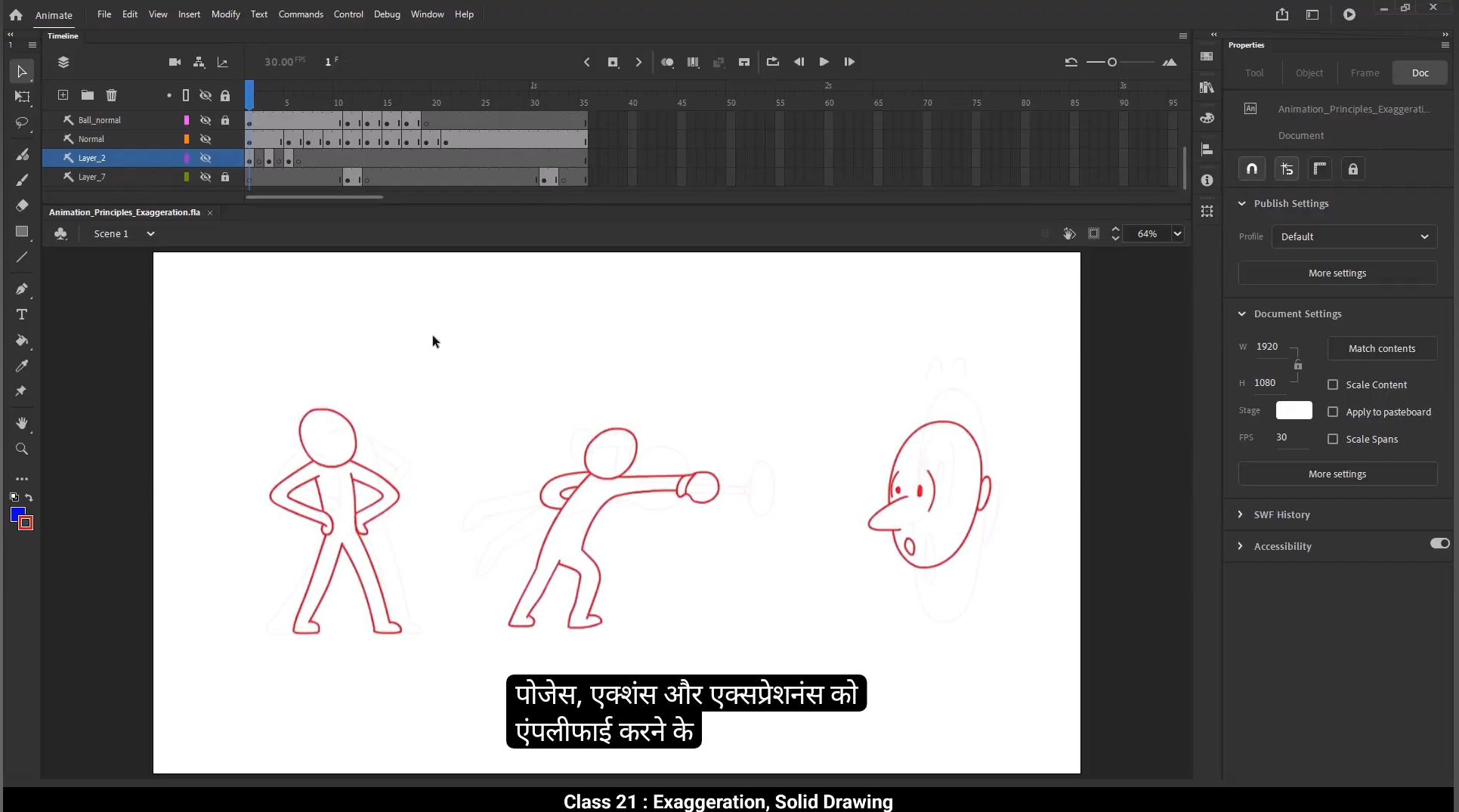
Hello students, in this tutorial we are going to explore the important animation principles, exaggeration and SOLID drawing. Let's begin with the first one.Exaggeration is a technique used to amplify poses, actions, and expressions to create a stronger impact on the viewer. By exaggerating movements, refining gestures, and intensifying facial expressions, you can create a more dynamic and engaging composition. For example, take a look at these poses. The top row represents normal expressions, while the bottom row demonstrates exaggerated express.Notice how we push the expressions further. If a character is sad, we make them even sadder. If they are happy, we make them even more joyful.
This enhanced emotional expression helps convey feelings more clearly and dramatically. Enhancing realism in animation isn't about strict physics or proportions, but about making actions and emotions more vivid and believable.Exaggeration should amplify expression without distorting a character's structure. By maintaining volume and form while emphasizing gestures, movement, and emotion, you create more dynamic and engaging visuals. Instead of just drawing a face, infuse it with depth and energy to bring the character to life.Let's take a look at this simple animation of a figure kicking a football. At first glance, it seems complete, but by adding exaggeration, we can make the action feel more dynamic and impactful. Now compare these two animations. The first version looks fine, but the kick appears less powerful. It seems like the motion is OK, but it lacks energy.Now observe the exaggerated version. The character pulls their leg back much farther.And delivers a stronger kick. The force of the impact sends the ball flying and the character jumps up in air due to the force of the action.At first glance, the still frames may appear too extreme to be realistic, but when played in motion, the exaggeration blends naturally. This happens because our eyes process multiple frames quickly, making the extreme poses less noticeable when seen in sequence.To make an action stand out even more, you can either hold the exaggerated pose on screen slightly longer to create emphasis, or push the exaggeration further to increase its impact. Since it's often difficult to determine the right balance, a good rule of thumb is to push the exaggeration to an extreme level and then wind it back until it feels just right. The key is to experiment and adjust until you are satisfied with the result.Now let's move on to the next animation principle, SOLID drawing. This principle ensures that all elements in an animation maintain a sense of three dimensionality with weight, volume, and balance. A well drawn character should look like it exists in real space rather than appearing flat or unstructured. Here you can see a 360° perspective of a character. Notice how it is carefully designed to maintain its form.And proportions from different angles.This is essential when creating characters, objects, and environments for animation. Solid drawing is particularly important during character design and pre-production. The pre production team ensures that characters, props, and assets are constructed properly using basic shapes that retain their structure in all perspectives. Animators must also follow this principle when bringing characters to life.They need a strong understanding Of three-dimensional drawing along with concepts like space, volume, weight, and balance. For example, if you're drawing a line on a sphere, it must curve along the shape to maintain the illusion of three dimensionality. A Straight line on the other hand, would make the sphere look flat.The same applies to character designs. Using curved lines helps maintain form, while parallel or straight lines can make a character look flat and unnatural.When drawing cubes, avoid making perfectly parallel lines. Instead, angle them toward the vanishing point to create depth and perspective. Otherwise, the shape will appear flat, resembling a symbol or logo rather than a three-dimensional form. Avoid using such flat shapes when designing or drawing characters, as they can make the artwork look unnatural and less dynamic.Here I have a character model sheet.To show you some small but important details, when designing characters, we often use basic shapes like spheres for heads and noses, cylinders for arms and legs, and cubes for torsos and structural parts.These simple geometric shapes serve as a foundation for constructing characters in a way that maintains depth and structure.They make animation easier by ensuring the character stays consistent throughout different frames.Another crucial detail is the use of perspective lines in backgrounds.Even if the scene does not have a detailed background, drawing guidelines on the ground helps maintain proper positioning and proportions.Perspective lines assist in determining the distance of the character from the camera, size comparisons between different characters, and the depth of the scene.This is especially important in broadcast animation, where different characters have varying sizes and must remain proportionate.When finalizing the design, it's also essential to keep overlapping lines in mind.These small, overlapping details, such as the folds of clothing, ear placement, or shoulder positioning, help create depth and perspective in a drawing.They give the viewer a clear sense of which body parts are in front or behind. For example, if a character's left hand is behind their body, a small overlapping line can indicate this depth effectively.By applying exaggeration to make animations more dynamic and using solid drawing to create well structured characters, you can take your animation skills to the next level. I hope you now have a better understanding of these two important principles. Keep practicing, experiment with different poses and perspectives, and most importantly, keep animating.Thank you for watching and see you in the next lesson.
Hello students, इस tutorial में हम explore करने वाले हैं important animation principles, exaggeration और SOLID drawing. चलो शुरू करते हैं पहले वाले से। Exaggeration एक technique है जिसका use poses, actions, और expressions को amplify करने के लिए किया जाता है ताकि viewer पर strong impact पड़े। Movements को exaggerate करके, gestures को refine करके और facial expressions को intensify करके आप एक dynamic और engaging composition बना सकते हो। For example, इन poses को देखो। Top row normal expressions को दिखाता है, जबकि bottom row exaggerated expressions को। Notice करो कैसे हमने expressions को और push किया है। अगर character sad है, तो हम उसे और sadder बना देते हैं। अगर happy है, तो और joyful बना देते हैं।
यह enhanced emotional expression feelings को और clearly और dramatically convey करता है। Animation में realism enhance करने का मतलब strict physics या proportions नहीं है, बल्कि actions और emotions को vivid और believable बनाना है। Exaggeration expression को amplify करे लेकिन character की structure को distort ना करे। Volume और form maintain रखते हुए gestures, movement और emotion को emphasize करके आप visuals को ज्यादा dynamic और engaging बना सकते हो। Face draw करने के बजाय, उसमें depth और energy डालो ताकि character life में आ जाए।
अब इस simple animation को देखो जहाँ figure football kick कर रहा है। पहली नज़र में ये complete लगता है, लेकिन exaggeration add करके हम action को ज्यादा dynamic और impactful बना सकते हैं। Compare करो इन दो animations को। पहला version ठीक लगता है, लेकिन kick powerful नहीं लगती। Motion ठीक है, लेकिन energy missing है। अब exaggerated version observe करो। Character अपना leg और पीछे ले जाता है और फिर strong kick deliver करता है। Impact की force ball को दूर उड़ा देती है और character भी force से हवा में jump करता है। पहली नज़र में still frames extreme लग सकते हैं, लेकिन motion में play करने पर exaggeration naturally blend हो जाता है। ऐसा इसलिए होता है क्योंकि हमारी eyes multiple frames को जल्दी process करती हैं, जिससे extreme poses कम noticeable लगते हैं।
Action को और standout करने के लिए आप exaggerated pose को screen पर थोड़ा ज़्यादा देर hold कर सकते हो या exaggeration को और push कर सकते हो। Balance ढूँढना मुश्किल हो सकता है, इसलिए एक अच्छा rule ये है कि exaggeration को extreme तक push करो और फिर वापस लाओ जब तक सही ना लगे। Key है experiment करना और adjust करना जब तक आप result से satisfied ना हो जाओ।
अब चलते हैं अगले animation principle की तरफ – SOLID drawing। यह principle ensure करता है कि animation के सारे elements में तीन dimensionality, weight, volume और balance का sense बना रहे। एक well drawn character real space में exist करता हुआ लगे, flat या unstructured नहीं। यहाँ एक character का 360° perspective दिखाया गया है। Notice करो कैसे इसे carefully design किया गया है ताकि हर angle से proportions और form maintain रहे।
यह characters, objects और environments create करते समय essential है। Solid drawing character design और pre-production में बहुत important होता है। Pre-production team ensure करती है कि characters, props और assets basic shapes से construct हों, जो हर perspective में structure maintain रखें। Animators को भी यह principle follow करना चाहिए जब characters को life में लाते हैं। उन्हें three-dimensional drawing की strong understanding चाहिए, साथ ही space, volume, weight और balance जैसे concepts की भी। Example के लिए, अगर आप sphere पर line draw कर रहे हो, तो वह shape के साथ curve होनी चाहिए ताकि तीन dimensionality का illusion बना रहे। Straight line sphere को flat दिखा देगी।
Character designs पर भी यही apply होता है। Curved lines form maintain करती हैं, जबकि straight या parallel lines character को flat और unnatural बना सकती हैं। Cubes draw करते समय perfectly parallel lines avoid करनी चाहिए। Instead, उन्हें vanishing point की ओर angle करो ताकि depth और perspective बने। वरना shape flat लगेगी और symbol या logo जैसी लगेगी। Characters design करते समय flat shapes avoid करो क्योंकि यह artwork को unnatural और कम dynamic बना देते हैं।
यहाँ एक character model sheet है। इसमें कुछ छोटे लेकिन important details हैं। Characters design करते समय हम अक्सर basic shapes use करते हैं – जैसे head और nose के लिए spheres, arms और legs के लिए cylinders, और torso व structural parts के लिए cubes। ये simple geometric shapes characters को depth और structure के साथ construct करने का foundation देते हैं। इससे animation आसान हो जाता है और character हर frame में consistent रहता है।
एक और crucial detail है perspective lines का use backgrounds में। Scene में detailed background ना भी हो, फिर भी ground पर guidelines draw करना मदद करता है proper positioning और proportions maintain करने में। Perspective lines camera से distance, characters के बीच size comparison और scene की depth determine करने में assist करती हैं। यह especially broadcast animation में important है, जहाँ अलग-अलग characters के sizes vary करते हैं लेकिन proportionate रहना चाहिए।
Design finalize करते समय overlapping lines का ध्यान रखना भी ज़रूरी है। ये छोटे overlapping details – जैसे कपड़ों की folds, कान की placement या shoulders की positioning – drawing में depth और perspective create करने में मदद करते हैं। ये viewer को clear sense देते हैं कि कौन सा body part सामने है और कौन पीछे। Example के लिए, अगर character का left hand body के पीछे है, तो एक छोटा overlapping line इस depth को effectively दिखा सकता है।
Exaggeration apply करके animations को dynamic बनाकर और solid drawing use करके well-structured characters create करके आप अपनी animation skills को next level पर ले जा सकते हो। मुझे उम्मीद है अब आपको ये दोनों important principles और अच्छे से समझ आ गए होंगे। Practice करते रहो, different poses और perspectives के साथ experiment करो और सबसे important – animate करते रहो। Thank you for watching और next lesson में मिलते हैं।